I didn’t expect something as simple as photo prompts to change the way I move through my days, but here I am, almost a year later, still surprised at how much they’ve pulled me closer to the people I love. It all started with my nieces, who have somehow grown into these funny, bright, busy adults who live in three different states now. They began sending little challenges in our family chat, usually late at night when they were supposed to be sleeping or studying. One of them would post a picture of something tiny and strange, like a fork sticking out of a birthday cake or a cracked window reflecting a rainbow at the grocery store, and the rest of us were expected to reply with our own version. At first I just thought it was their way of messing around, because that’s what they do, but then the habit stuck. Before long I found myself looking around more just so I’d have something to share back with them, and it became this gentle thread tying us together even though we weren’t anywhere near each other.
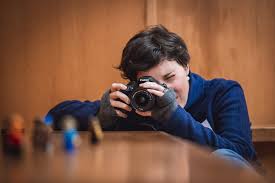
Back then I didn’t think of it as anything creative. I’m not really the artsy type, not in the traditional sense. I don’t paint or draw or have fancy camera gear hanging around. But I am someone who forgets to slow down, especially now that most of my days look the same. I go from errands to laundry to work calls and back again, and sometimes I’ll realize I barely lifted my eyes from whatever task was in front of me. The first time I noticed a small pattern in a row of plastic cups at the store—because it reminded me of one of the niece’s earlier challenges—I laughed out loud. It wasn’t funny to anyone else, I’m sure, but it felt like a tiny rediscovery of how to pay attention. That’s when I realized these little prompts weren’t only for them. They were something I needed too.
The more I played along, the more things started to pop out at me. Colors on my walk, for example. I never used to notice how the morning sunlight hits the old red mailbox down the street or how the neighbor’s faded fence turns almost lavender in the late afternoon. Now I catch myself pausing mid-stride just to take it in. I’ll see a cluster of leaves caught in a swirl and take a picture because it might make the girls laugh. I’ll spot a shadow shaped like a crooked heart on my porch and snap it just in case it fits that week’s thread. One day my youngest niece asked if I had always been “this observant,” and I told her the truth: “No, sweetheart. You taught me.”
We didn’t call them photo prompts back then — they were just our silly little family game — but I’ve noticed the term creeping into my vocabulary now. I guess because that’s what they’ve become: small invitations to look, to see, to think about what’s right in front of me instead of rushing past it.
Over time, I’ve learned tiny tricks to make the whole thing easier. I wouldn’t call them artistic tricks, but they help me enjoy the moments more. For instance, if I’m on a walk, I’ll slow down at the corner where the tall oak tree creates those crazy swirled shadows across the pavement. Every day the shapes look different, depending on the wind or the cloud cover, and I’ve found myself watching the patterns like someone watching the tide roll in. Or when I’m in the grocery store, I’ll glance at the rows of apples stacked in those shiny pyramids and try to find the one that stands out, not because it’s prettier, but because something about its shape or its little stem makes me smile.
When I share these things with the girls, the funniest part is how much we end up talking afterward. They’ll send back their own photos — a messy desk while studying, raindrops caught on a window, or a little chalk doodle on a sidewalk — and each message spins into a conversation. We’ll talk about their jobs or school or who they’re dating, and it always starts because one of us noticed something tiny and wanted the others to see it too. Those small details turned into a way of keeping each other present, even when weeks go by without us meeting in person. It’s like having a conversation running in the background of our lives, steady and warm.
What surprised me the most is how these simple habits spilled into parts of my routine I never expected. I’ll be sipping coffee in the morning and catch myself studying the way the steam curls up in little ribbons, or I’ll notice the way the sunlight hits my hallway floor in a long stripe that shifts through the day. None of these things are important in the grand scheme of anything, but they make me feel more grounded. They remind me that there’s more happening in my house, my yard, my neighborhood, than the endless list of things I think I should be doing.
I didn’t expect a simple family habit to feel like growth, but that’s what it has become — not dramatic growth or anything that would make a great before-and-after story, just a gentle kind that feels natural. And every time one of the girls sends a new challenge, I feel that same warm spark again. I look up. I notice where I am. I remember that our lives have little corners full of things worth seeing, even when they’re ordinary. Especially when they’re ordinary.
How Paying Attention Changed the Way I Move Through My Days
As the months went on, something interesting happened that I didn’t expect at all. I started noticing that my mind felt lighter whenever I slowed down to look for the little moments worth sharing. It was almost like my brain had been stuck in a fast-running stream for years, always telling me to keep moving, hurry up, do the next thing, and then do the next thing after that. But when I began looking around more, just because I wanted to impress the girls with some tiny discovery of my own, I felt myself stepping out of that fast current for a minute. I would stand a little longer in the produce aisle because the bright green of the limes looked nice against the darker trays underneath them. Or I would pause in the driveway, keys in my hand, because the clouds looked like they had brushed across the sky in these slow, wide strokes. Noticing things became almost like a break, but a quiet kind of break that didn’t require me to sit or stop everything. I could do it while living. That surprised me, in a good way.
At first, I didn’t tell anyone else in the family about how helpful it felt. I figured they’d tease me for turning something silly into something deep, and normally they would have been right. But one weekend, when all three nieces happened to be in the chat at the same time, one of them asked why I always seemed to have the most “peaceful pictures,” as she called them. I told her I didn’t think they were peaceful at all — half the time I was holding grocery bags or trying not to trip over my own feet — but I admitted that I liked taking a moment to breathe while I looked for something to share. They both responded with their own stories about how taking photos, even simple ones, made them feel more grounded too. That’s when I realized we had accidentally created a shared habit that pulled all of us toward a calmer place without any of us trying too hard.
One of the strange truths I’ve learned is that you don’t have to travel or be anywhere exciting to feel like you’re paying attention to your life. One afternoon, for example, I was folding towels in the living room when the sunlight shifted in this slow, soft way that made everything glow. It made the whole scene feel like something out of a quiet movie. I put the towels down, grabbed my phone, and took a picture of the way the edge of the window frame cast a crisp shadow across the table. There wasn’t anything special about it, but it mattered because it pulled me out of autopilot. When I sent the picture to the girls, one of them replied with a photo of her coffee mug sitting on top of her thick textbook, and she wrote, “Your moment helped me find one of my own.” That message sat with me for a long time.
After that exchange, I started thinking of our little habit as a way of sharing small pieces of our day that we wouldn’t normally mention. We talk about big milestones, of course — jobs, breakups, birthdays, travel — but these tiny snapshots felt like a different kind of connection. They were the kind of moments nobody remembers unless someone points them out. And honestly, those are the ones that tell you what a real day feels like. That’s when I started using what I think of as my “slow eyes,” which is just my silly term for letting myself look at things without rushing. It’s not artistic, and it’s not some spiritual practice, but it is a way of showing up in my own life more fully. I like that. It makes me feel like I’m not just passing through my days but actually living them.
There were times when the girls would send prompts that didn’t immediately speak to me — like the week we were supposed to find something “imperfect but beautiful.” I remember standing in my kitchen looking around and feeling like everything in there was imperfect, but not in the charming way they meant. The sink was full, the floor needed sweeping, and the stack of mail on the counter was starting to lean. But after I stood there for a while, I noticed a hairline crack running across the side of my old ceramic dish. I’ve had that dish forever. It was given to me by my sister when the girls were practically babies. I almost never pay attention to it anymore, but for some reason that evening the crack looked soft and gentle instead of broken. I took a picture of it, the crack catching the light in a pale line, and sent it to the chat. And I’m telling you, I nearly got emotional when the girls responded, each saying something about how the dish reminded them of being little in my house. That moment stayed with me more than I expected.
That was one of the first times I realized we weren’t only playing with photo prompts. We were beginning to talk about our lives in a way that didn’t require explanations or long messages. The pictures carried the meaning for us. A chipped dish, a messy stack of papers, a warm splash of sunlight — these things weren’t impressive, but they were real. That mattered to me.
I’ve read before — not in a fancy book, just in a small article somewhere — that noticing details can make a person feel calmer because it takes your mind out of the future for a moment. Maybe that’s what this has done for me. I spend so much time planning things or worrying about what’s coming next. But when I’m looking for a moment worth sharing, I stay in the present without even trying. It’s a gentle shift, almost unnoticeable, but it changes how the rest of the day feels. My nieces say it too. One of them told me it’s like the world becomes friendlier when she’s paying attention to it. I liked that description. It felt true.
Another thing I’ve started doing — and this is a tiny habit, but it helps — is keeping my phone in my pocket when I walk around the neighborhood. Not to check messages or scroll, but simply so I can grab it quickly if I see something interesting. Sometimes it’s nothing but a strange reflection on a parked car. Sometimes it’s the way the wind has pushed a bunch of leaves into the shape of a long wave. And sometimes it’s just a memory I want to keep. My neighbor’s cat sitting on the top step with her tail wrapped around her like she’s posing for a portrait. Or the dusty blue paint on an old mailbox that seems to fade a little more each year. These moments feel small, but they make me feel more connected to the places I pass through every day.
I guess that’s been one of the biggest surprises: the way a simple habit can make the world seem bigger and softer at the same time. You start by looking for something tiny to photograph, and before long you’re noticing things that never mattered to you before. A crooked fence post. The reflection of headlights on a rainy street. The stripes on a stack of cardboard boxes. These details aren’t dramatic, but they give shape to the world in a quieter way. Sometimes I think this whole routine is our family’s version of staying creative together, the same way some families cook recipes or make crafts. We use everyday moments. We use whatever we can find right where we are. And honestly, I think that’s part of why it feels so comforting: nothing about it asks us to be perfect. We just get to look, notice, and share.

The Little Routines That Started to Become Something More
One habit that snuck up on me was how I started treating my everyday errands like tiny treasure hunts. I never set out with a plan or any idea of what I might find. I would just move through the day, and every so often something would catch my eye for no real reason. It happened one morning when I was half-asleep and standing in line at the post office. I noticed the long row of metal mailboxes along the wall and how each one had a slightly different shade of wear. Some were scratched, some were glossy, and one had a tiny sticker someone must have left years ago. I hadn’t even lifted my phone yet, but I found myself smiling because it felt like one of those moments the girls would appreciate. I snapped a picture, not to be clever or artistic, but simply to say, “Look what I saw today.” And somehow they always knew what I meant.
There were other times when I didn’t capture anything at all. Some days the world just felt ordinary, and nothing jumped out at me. But even on those days I realized I was paying more attention than I used to. I’d look at the way the parking lot paint was fading or watch the way someone’s jacket rippled in the wind while they walked ahead of me. These weren’t things I needed to photograph. They were things I needed to notice. That became a kind of quiet practice, the kind that works whether you take a picture or not. I didn’t tell the girls about that shift, but I think they felt it anyway because they started talking about their own small discoveries even when they didn’t send photos that day.
One afternoon, after a long, stressful morning of calls and emails and things going wrong, I stepped onto my porch just to breathe. The day felt like it had been pressing down on me since sunrise, and for a minute I thought about skipping our little routine altogether. But then I saw the way the light stretched across the porch floor in this uneven stripe that looked like someone had painted it with a wide brush. Dust floated through the beam of sunlight in slow, soft swirls, and everything felt still in a way I hadn’t expected. I raised my phone and took a picture without thinking. I didn’t frame it or adjust anything. I just caught the moment as it was. Later, when I sent it to the girls, one of them wrote, “It feels like I can hear the quiet in this.” I didn’t correct her or explain anything. I simply wrote, “Me too,” because it was true.
That day reminded me how noticing small things doesn’t erase stress, but it does give my mind something friendlier to hold on to. It’s like taking a slow breath without meaning to. And when I try to describe it, I call it our “shared seeing,” which is my own little phrase for how connected the four of us have become through these tiny exchanges. It amazes me sometimes. We aren’t doing big updates or long heart-to-heart talks. We’re just sharing ordinary moments. But those ordinary moments have shaped something stronger between us than any planned family activity ever did.
I’ve also found myself becoming a little braver about taking photos in public, which used to make me feel awkward. I used to worry someone might think I was taking a picture of them, or that I’d look ridiculous for snapping a picture of a lamp post or a stack of apples. But the more the girls encouraged me, the easier it felt. One of them even told me, “Aunt Lila, nobody cares what you’re doing. People take pictures of their sandwiches these days.” That made me laugh, and weirdly, it did help. Now if something catches my attention, I just take the picture. And most of the time, the moment passes before anyone even looks up.
Once, I was at the hardware store picking up lightbulbs when I spotted this line of paint swatches arranged in rainbow order. The colors were printed in tiny rectangles that looked like they belonged in an art studio instead of a store aisle. Something about the way the bright yellows melted into the greens made me pause. I leaned in and took a quick photo. The swatches were nothing special, but they made my day feel a little easier. When I sent the picture to the girls, my oldest niece replied first. She sent back her own version taken from a bakery display case filled with macarons arranged in the same kind of gradient. She wrote, “Look, we matched.” And just like that, the heaviness in my chest loosened.
Every so often, I think about how differently my days would feel if we hadn’t fallen into this habit. Before, I might have gone through an entire week without noticing half of what I see now. I would have rushed from one task to another and convinced myself there was nothing worth noticing anyway. But when you look for one small thing to share — one moment, one texture, one odd detail — you start to realize your routine is full of interesting corners. They’re just quiet. They sit there waiting for someone to pay attention. And sometimes that someone turns out to be me.
Another shift I didn’t expect was how much I started sharing little tips with the girls, even though I’m not someone who usually gives advice unless asked. They began asking questions like, “How did you make this one look so warm?” or “Why does this one feel cozy even though it’s a picture of a parking garage?” And I would laugh because half the time I didn’t know the answer until I thought about it. That led me to realize I had kind of created my own little methods. Not fancy, not artistic, just practical. One was something I called “follow the light,” which is exactly what it sounds like. If the light looks interesting, follow it. Another one was “lean in closer than you think,” which came from the time I stuck my face almost into a cluster of flowers just to get the angle right. They teased me about that one, but they still use it.
All of these small discoveries made the world feel more personal. It wasn’t just a place I traveled through on my way to do something else. It became a place with personality, texture, color, and rhythm. And that changed how I felt about my own days. I think that’s why this whole routine matters so much to me. It’s not just the photographs, and it’s not even the conversations afterward. It’s the feeling of being awake in my own life. I don’t think I ever expected something as simple as photo prompts to teach me that, but they did.
Sometimes I think of all this as a kind of gentle creative practice, even though I’m not the kind of person who uses big creative words. But it feels like creativity in its simplest form — noticing, appreciating, and sharing. That small rhythm has stitched the four of us together in ways I didn’t even know we needed. And when I look back at the pictures, even the blurry ones, I can see how much we’ve grown into this habit together. It feels like something that belongs to us now, something that keeps us connected across all the miles and states and busy schedules.
The Way Our Conversations Started to Change
There was a morning not too long ago when I realized just how much this whole habit had shifted the way we talk to each other. I was sitting at my kitchen table with a lukewarm cup of coffee, scrolling through our family chat, when I noticed something funny. The girls weren’t only sharing their pictures anymore. They had started telling me tiny stories tucked in between the images, and I had begun doing the same without even noticing. One niece sent a close-up of the frost on her car window one early morning before class, and instead of simply saying it looked pretty, she wrote about how cold her hands were and how the campus sidewalks were slippery but sparkly. Another shared a picture of her messy desk and admitted she hadn’t slept well. Somehow, these simple snapshots had opened the door to more honest conversations, not heavy or dramatic, but warmer and more real.
It made me think about how connection doesn’t always need big moments or grand gestures. Sometimes it just needs an opening, a little place where someone feels invited to share something true. The pictures did that for us. They made it easy to talk about our days without feeling like we had to explain everything. Instead of asking, “How are you?” which people sometimes answer without thinking, we were showing each other the answer. It felt more natural, more grounded. I didn’t set out to create anything meaningful. I just wanted to stay close to the kids who used to run through my house with sticky fingers and wild imaginations. But somehow the habit grew into something with its own shape.
One evening I was sitting in my car outside the pharmacy waiting for a prescription to be filled. The sky was turning orange in that slow way it does when the sun sinks behind the strip mall sign. I noticed how the neon lights from the building mixed with the warm colors in the clouds, and I lifted my phone to take a picture. I sent it to the girls with a note that said, “Waiting my way through the day again.” Within minutes, one niece replied with her own photo of a little diner sign glowing against the night sky outside her part-time job. She wrote, “Matching skies from opposite sides.” I stared at her message for longer than I meant to, because it reminded me how powerful these ordinary moments had become for keeping us together.
Another niece told me she had shared our routine with a friend, and the two of them started doing something similar. She said it made them feel like the day had small rewards hidden in it. I loved hearing that, mostly because it sounded like the kind of lesson I used to try to pass along when they were younger, only this time they learned it themselves. It also reminded me of something I had been feeling lately—that noticing tiny details makes the world seem friendlier, like it’s offering small gifts if you look long enough. I don’t mean anything grand. I just mean the way a puddle reflects the sky, or the way the air smells different after it rains. When you start looking for these things, it changes the pace of your thoughts.
There were days when I shared moments that didn’t even feel pretty, but they still mattered. Once I took a picture of my cluttered kitchen counter. Nothing dramatic, just the normal bits of life—mail, a half-written grocery list, and a plant I kept forgetting to water. When I sent it, I said something like, “Today feels messy but honest.” To my surprise, the girls didn’t tease me. Instead, one replied with a picture of her laundry basket overflowing because she had been too tired to wash anything all week. We ended up talking about how overwhelming life gets sometimes, and how comforting it is to know other people feel the same. Looking at those pictures side by side made the day feel less heavy for both of us. And that was when I realized how connected our small routine had become to our emotional lives. We weren’t just sending pictures. We were sending pieces of understanding.
I think that’s why I became more patient with myself over time. I used to move through my days feeling like I was always behind, always trying to catch up with something. But once I started pausing long enough to see the tiny corners of my routine, the pace of my thoughts softened. I found myself taking breaths I didn’t even know I needed. Sometimes I would step onto my porch in the middle of a hectic afternoon and look at the light hitting the wooden railing, just to remind myself that the world wasn’t rushing me. It made everything feel a little more manageable. I didn’t realize I had been craving that feeling until it arrived.
My nieces like to joke that I’ve become the “calm aunt,” which is funny because I’ve never thought of myself that way. I’ve always been the one trying to do five things at once. But I guess the habit has changed me, even if it’s just a little. The girls say they can see it in the way my pictures feel, that they have a slower rhythm to them. That made me smile, mostly because I didn’t set out to slow anything down. I simply started to see what was already there. It reminds me of something I read once, long before we started using these prompts, about how capturing small details helps anchor your attention. I didn’t understand it back then, but it makes sense now. You don’t have to be artistic to appreciate the ordinary world. You just have to notice it.
Sometimes I wonder what our lives would look like if we hadn’t found this little routine. Would the girls text me as often? Would I feel this connected to their days from so far away? Would I even have noticed half the things that brighten my mornings now? I don’t know the answers, but I do know that these shared habits have become something I look forward to. When my phone buzzes with a new image, I feel a rush of warmth before I even see what it is. And when I send my own, I feel like I’m sending a moment of my real life, not just a picture. It feels honest.
No one would look at our pictures and think they’re part of anything grand. They’re not artistic collections or journal entries or anything polished. They’re simple glimpses of a world we’re learning to appreciate together. That’s what makes them meaningful. And every time I think about how those moments stitched themselves into our lives, I feel grateful. This habit didn’t ask me to be perfect. It just asked me to look. And somewhere in the middle of all that looking, I realized I was seeing myself more clearly too.
Learning to Let Small Moments Teach Me Something
There is a corner of my neighborhood where the sidewalk curves around an old sycamore tree, and for some reason that little bend became one of my favorite places to look for something interesting. I walk past it almost every day, sometimes without noticing anything at all, and then suddenly I’ll spot a detail I swear wasn’t there before. One morning I stopped because the bark had peeled away in a pattern that reminded me of a patchwork quilt. Another time the fallen leaves had blown into a perfect spiral at the base of the trunk, like someone had arranged them on purpose. I don’t know why, but those tiny things made me feel like the world had a personality. I snapped a picture for the girls, and when I sent it, one of them wrote, “You see things I would walk right past.” That made me proud in a quiet, simple way.
Over the months I started sharing more of the things I learned along the way, mostly because the girls kept asking. I told them how I sometimes tilted the camera just a little to catch the shadows at a better angle, and how stepping even one foot to the left could change the whole mood of a picture. I explained how I liked taking photos in the late afternoon because the light seemed softer and warmer. When they asked how I figured these things out, I told them the truth: I learned by paying attention. Not in a complicated way, just in the way you start to learn what works for you when you’re not rushing. That’s something I wish I had learned earlier in life, but I suppose learning it now is better than never at all.
There was one day that stands out more than most, because it felt like something inside me clicked. I had gone to the grocery store, tired and not in the mood for crowds, but as I stepped through the produce section I noticed the brightest display of bell peppers I had ever seen. They were arranged in a tall, perfect stack with reds, yellows, and greens in neat rows. The colors were so bold they looked almost unreal. Without thinking, I leaned in closer and took a photo from an angle low enough that it caught the shine on the skins. When I sent it to the girls, I didn’t say anything clever. I just wrote, “Today felt heavy but this helped.” Their responses came in quickly—a picture of a dog they passed on the sidewalk, a sunset through a bus window, a pile of notebooks in a cozy corner. None of the photos matched mine, but they all carried that same message: tiny things matter when the day feels too big.
That was the moment when I started to understand that our habit wasn’t just fun or cute. It was becoming a way for us to steady ourselves. A way to touch base without needing long explanations. I think a lot of families struggle to stay connected when everyone grows up and moves away. But these small shared moments created a rhythm that held us together. We weren’t scheduling calls or planning anything complicated. We were simply showing each other something from our day. And it surprised me how powerful that was.
I remember one evening when I was cooking dinner and the steam from the pot curled up in soft rings. The kitchen lights were dim, and everything felt warm and slow. On impulse, I snapped a picture of the steam rising. When I sent it, one niece replied almost instantly with a picture of her own kitchen mess and wrote, “Cooking for one tonight, but it still feels like home.” We ended up talking for almost an hour about recipes, old family dinners, and how strange it feels to build your own routines in adulthood. None of that conversation would have happened without the picture. It was the opening she needed. And I realized how often a simple moment, captured honestly, can do more than any planned conversation.
Around that time I began paying even more attention to the light. Not because I was trying to make anything look dramatic, but because I loved the way it changed the mood of even the smallest things. I’d watch how it hit the blinds in thin, bright stripes, or how it softened the corners of my living room late in the day. One time I took a picture of a shadow stretched diagonally across my floor, nothing but a stripe of soft gray against the hardwood. I almost didn’t send it because it seemed too plain. But when I finally shared it, one of the girls wrote, “This makes me breathe slower.” That message told me everything I needed to know. These little exchanges had become a way of offering calm to one another.
I started calling these everyday discoveries my “quiet markers,” even though I never said that phrase out loud to the girls. A quiet marker is just a small thing in the day that changes the way you feel, even if only for a moment. The steam from a pot. A patch of sunlight. The pattern of a sidewalk crack. These tiny signals remind me that life isn’t only made of tasks and routines. There’s beauty tucked into the corners if you’re willing to look for it. And that’s the thing I try to explain when people ask why we’re still doing these photo prompts after so long. I tell them the truth: they help us see our lives with kinder eyes.
One niece said once that our habit makes the world feel “more textured,” which I thought was such a lovely phrase. She described how she pays attention to the feel of things she never noticed before—the grain of a wooden table, the ridges on a sweater, the uneven patterns in a puddle. She said noticing these details makes her feel more present. I told her I felt the same way. And that’s when it hit me that this whole routine had become a shared form of simple mindfulness, even though none of us would ever use that word in our regular conversations. It was just a natural result of looking more closely at our lives.
That’s when I began telling the girls about the small tip I called “find the feeling first.” It wasn’t about getting a perfect picture. It was about noticing how something made you feel before you lifted the phone. If a moment felt calming, warm, funny, or comforting, then it was worth capturing. They loved that idea. And even though I don’t think of myself as someone who teaches anything, it felt good to pass along a little wisdom that came from my own everyday experiences. These weren’t artistic rules. They were just the things I learned while paying attention.
Looking back, it amazes me how much meaning grew out of something we started by accident. The girls wanted a fun way to stay in touch, and I wanted to feel closer to them despite all the miles in between. Now this habit has become something almost like a shared journal, written in moments instead of words. If someone had told me a year ago that taking simple photos would change the way I experience my days, I probably would have laughed. But now I know better. Sometimes the smallest habits create the biggest shifts. And for us, this one has become a gentle thread running through all our lives, pulling us together even when the days get busy or complicated or lonely.

The Ways Creativity Shows Up When You Aren't Trying
Something I never expected was how much creativity can sneak up on you when you’re not trying to be creative at all. I used to think creativity belonged to people who painted or wrote or played instruments, and that the rest of us were just observers. But the longer I kept sharing small moments with the girls, the more I realized that creativity lives inside the way we notice things. It shows up when you look twice at something ordinary and feel a tug of curiosity. It shows up when a moment makes you stop, even if you can’t explain why. It shows up when you shift your angle just a little because something feels nicer from the side instead of straight on. I didn’t think of any of this as creative in the beginning, but somewhere along the way, I started to see the patterns.
I think it began the afternoon I spotted a row of mismatched mugs at a thrift store. They were sitting on a dusty shelf, each one chipped in a different place, and I took a picture because the whole scene made me smile. When I shared it with the girls, one of them wrote, “These look like characters from a story.” I hadn’t thought of it that way, but as soon as she said it, I saw exactly what she meant. Each mug really did seem to have its own little personality—bright, faded, crooked, fancy, plain. I walked out of the store that day feeling like the world had just whispered something warm to me. And I began noticing that same feeling more often.
Another moment that stayed with me happened during a stormy evening when the power flickered a few times and I lit a small candle on my kitchen counter. The flame cast this soft, wobbly glow across the dishes I had lined up to dry, and I remember thinking how pretty it looked even though the lighting was unstable. I took a photo, and the picture turned out darker than most of the ones I share, but there was something comforting about the mood of it. When one of the girls replied with a picture of her own candlelit apartment, she wrote, “Feels like we’re in the same room.” And honestly, that’s exactly how it felt. Moments like that taught me that creativity is really just a way of paying attention to the feeling something gives you.
As time went on, I started noticing how my photos carried little bits of my personality in ways I never meant to place there. I tend to take pictures of things with soft colors or gentle shapes. The girls tease me because I avoid anything too bright or chaotic unless it catches me by surprise. One niece likes to photograph reflections in windows or puddles. Another focuses on textures—ridges in concrete, woven baskets, rough tree bark. I didn’t realize until we compared a handful of our pictures one day that each of us had developed our own “style.” Not on purpose, but because we each gravitated toward the moments that spoke to our own lives. It amazed me how something as simple as photo prompts had turned into a way of expressing ourselves without even thinking about it.
There was one Saturday morning when I walked into my living room and noticed a beam of sunlight catching the dust in the air. The whole scene looked soft and calm, like the moment had paused itself. I didn’t rush to capture it. I just stood there for a second letting it sink in. I think that’s when I realized how often I used to look without really seeing. Before this habit, I might have walked right past the moment without giving it a second thought. But now it felt like a gift, like the day was handing me something small to appreciate. When I finally did take a picture, it wasn’t because I wanted to impress anyone. It was because I wanted to remember how the light made me feel in that exact moment.
A few days later, one of the girls asked if I ever felt silly taking pictures of ordinary things. I told her the truth: I used to, but not anymore. The more I looked for moments worth saving, the more I realized that the ordinary world is full of beauty if you slow down long enough to see it. People don’t need fancy scenes or perfect backgrounds to feel moved by something. Sometimes a messy counter or a crooked lamp can carry more truth than a picture that looks staged. I told her that authenticity will always mean more than perfection. And she said that’s what she loves most about our habit—that none of us are trying to make anything look flawless. We’re simply sharing life as it happens.
There were times when the girls sent pictures that made me laugh because they were so wonderfully random. One niece once shared a close-up of her shoelaces after they came undone during a run. Another sent a photo of her overflowing backpack with a caption that simply said, “Week two.” The images weren’t beautiful in the traditional sense, but they were alive with personality. They were reminders that the people I love are out there living real days, full of stress and humor and heart. And that made the world feel less scattered, less lonely.
As I paid more attention to what I was capturing, I also started noticing how much the world changes when you look at it through a slightly different lens. For example, one evening I took a walk around the block after dinner, and the streetlights cast these long stretches of gold across the pavement. Cars drove by slowly, and their headlights made the shadows dance in wide arcs. It felt magical, even though it was just my regular street. I snapped a picture and sent it to the girls. One of them responded with her own twilight photo, and she wrote, “I like evenings more now because of you.” That message sat with me for days.
Eventually I realized that all this noticing had changed something in me. I wasn’t rushing through my life the way I used to. I wasn’t measuring my days only by what I completed or what I managed to check off my list. Instead, I was measuring them by the moments that made me pause. And because I had started paying attention to those moments, the girls started paying attention to theirs too. That’s when I understood that this whole routine was never really about the pictures. It was about the connection behind them. It was about finding small things that felt honest and alive. It was about letting the day speak to us in its own quiet way.
If someone asked me now why we still use photo prompts after all this time, I would tell them it’s because they helped us rediscover each other. They made us slow down. They made us laugh. They made us share pieces of our days that would have been forgotten otherwise. And most of all, they reminded us that creativity doesn’t require talent or training. It only requires attention. And sometimes, attention is exactly what the heart needs.
How Routine Turned Into a Family Tradition
It took me a while to notice how our habit had grown into something that looked a lot like a family tradition. One afternoon I was scrolling through our chat history, looking for an old picture, and I realized just how many little moments we had shared over the months. There were dozens and dozens of photos, each one tied to a small story or memory. Some were silly, like the time one niece found a grocery cart with only three wheels and sent a blurry picture of it wobbling across the parking lot. Others were sweet, like the quiet snapshots of favorite study spots or the view from a late-night walk. As I kept scrolling, something inside me softened. I could see the slow unfolding of our lives right there on the screen, one tiny square at a time.
I think what struck me most was how naturally the whole thing had developed. We never sat down and said, “Let’s make this a tradition.” We didn’t need to. It simply became part of the way we stayed connected to each other. It reminded me of how families sometimes create memories without meaning to—like the way my sister used to sing off-key lullabies that the girls found hilarious, or how we’d always make a pot of hot chocolate on the first cold day of the year. Nobody planned those things. They just happened, and we held onto them because they made life feel warm and familiar. That’s exactly how these picture exchanges began to feel.
One evening, while I was cleaning out the junk drawer in my kitchen, I came across an old photo album from years ago. Inside were dozens of printed pictures—holidays, birthdays, the girls playing in my backyard when they were little. I sat down on the floor and flipped through the pages, smiling at their messy hair and big grins. And as I looked at those older photos, I realized how similar they felt to the ones we send each other now. They weren’t staged or perfect. They captured the real stuff. The everyday life. The small joys and chaotic moments that make up a family’s story. For a moment I felt this wave of gratitude wash over me, because even though the girls are grown and scattered across the map, we’ve found a new way to keep writing that story together.
The next morning, I sent them a picture of my old photo album sitting open on the floor, along with one of the pages filled with little kid memories. I wrote, “We used to do this without phones,” and added a smiling emoji because I didn’t want to sound too sentimental. They loved it. One niece replied that our new habit felt like “a modern scrapbook,” which made me laugh, but she wasn’t wrong. Another niece sent a picture of the small notebook she uses to jot down her favorite moments from the week. She said the notebook makes the days feel less blurry. I told her I understood exactly what she meant.
It was around this time that I noticed how my own days felt less rushed, even though nothing about my schedule had changed. I still had chores and responsibilities and errands, but paying attention to small things made time feel different somehow. More spacious. More forgiving. And when I shared this with the girls, they agreed that slowing down didn’t make the days less full—it made them fuller in a gentler way. That’s when I realized how much these picture exchanges were shaping all of us, each in our own quiet way.
I remember one night when I was getting ready for bed, and the hall light cast this long, soft glow across the carpet. I stopped in the middle of brushing my teeth because the moment felt peaceful. I didn’t even take a picture that time. I just let myself stand there for a second, breathing it in. When I told the girls about it the next morning, one of them wrote, “You’re becoming more poetic.” I laughed because I didn’t feel poetic at all. I felt like someone who had finally learned how to notice the small things. But their message made me realize something important: seeing your own life clearly can make even the simplest moments feel meaningful.
One weekend, when the girls were home visiting their parents, they stopped by my house just to say hello. We ended up sitting around my kitchen table for an hour, talking and laughing the way we used to when they were little. Before they left, one niece picked up my phone from the counter and opened our group chat. She scrolled through our shared pictures and said, “Aunt Lila, this is our family timeline.” And I swear, hearing her say that made my throat tighten. She was right. The collage of images—ordinary, imperfect, heartfelt—had become a record of our lives stitched together through all the days we didn’t spend in the same room.
That realization made me think about how traditions get passed down. Sometimes they’re big things like special recipes or holiday rituals. But sometimes they’re tiny things, like the stories people tell or the habits they keep. I began to wonder if the girls might someday pass this habit to their own kids or friends. Maybe they’ll teach someone else how to slow down and see the world with softer eyes. Maybe they’ll show someone how to use photo prompts the way we do—not to create anything fancy, but to stay connected through the clutter and rush of everyday life. I like to imagine that happening, not because I care about the pictures themselves, but because I know how much the habit has meant to us.
There was a small shift in me during those weeks. I started to feel like noticing things had become a kind of anchor in my life. When things got chaotic or overwhelming, I’d take a short walk or step onto the porch and look for something true—something real that belonged to the moment. A shadow. A color. A shape. A little sign of life doing what it always does. And it never failed to make me feel more grounded. The girls started talking about their own versions of this too, and together we formed a rhythm that felt steady even during stressful weeks. It didn’t matter what state we were in or what we were dealing with. The connection was always there, waiting for us in the next small moment.
And I think that’s what made this routine feel like a tradition instead of a hobby. It wasn’t something we needed to remember to do. It was something we looked forward to doing. It slipped into our days naturally, like breathing. And the longer we kept it up, the more I realized that this simple habit had given us a gentle kind of closeness that didn’t depend on holidays or special events. It was woven right into the fabric of our regular days. That felt like a little miracle to me. One that arrived quietly and stayed.

How Sharing Small Moments Helped Me Understand Myself Better
Something unexpected happened as I continued paying attention to these tiny moments in my day: I started to understand myself in a way I never had before. It wasn’t dramatic or anything like that. It was subtle, like walking past a mirror without meaning to and catching a glimpse of yourself from an angle you normally don’t see. I began noticing patterns in the kinds of things I photographed. Soft colors. Clean lines. Gentle light. Everyday objects that looked peaceful without trying. For a while I didn’t think much of it, but one afternoon, as I scrolled through months of our shared pictures, I realized that these moments weren’t only things I liked. They were things I needed.
There is something grounding about recognizing what speaks to you, even if it’s not grand or impressive. One niece once told me that my photos felt like “exhales,” and as soon as she said it, I felt something warm settle in my chest. She was right. The moments I captured always seemed to be the ones that made the world feel a little easier to hold. A cup of tea with steam rising in thin ribbons. The smooth curve of a polished stone on my windowsill. A patch of sunlight sliding across the carpet. None of these things were fancy, but they calmed me, and I didn’t realize how much I relied on them until I started collecting them without meaning to.
One morning I was sitting on my porch with a blanket around my shoulders, watching the breeze move the leaves in soft waves. The air was cool enough to wake me up a little, and I remember feeling this quiet sense of belonging settle over me. Not because anything special was happening, but because I felt present. I reached for my phone, took a picture, and sent it to the girls with a caption that said, “This is what my morning feels like.” Within a few minutes they sent their own moments back—coffee cups, messy desks, the first sunlight coming through bedroom curtains. We weren’t just sharing things we saw. We were sharing how our days felt. That made a surprising difference in how I understood their lives too.
Over time I learned how each of the girls used the prompts differently. One niece liked capturing motion—a passing bus, a turning page, leaves falling midair. Another paid attention to patterns, like the symmetry on the tiles in her dorm hallway or the repeating ridges of a metal fence. The youngest gravitated toward color, especially bright ones she found in clothes or food or neon signs. Seeing their differences made me appreciate how creativity shows up in each person’s life in its own way. And it reminded me how special it is that something as simple as photo prompts had become a window into their personalities.
There was another moment that taught me something about myself without me even realizing it at first. I had gone out for a late walk after feeling frazzled from a long day. The sky had already settled into that blue-gray shade that comes just before nightfall, and the streetlights had begun flickering on one by one. As I walked, I noticed the reflection of one streetlight stretching across a puddle in this long, shimmery line. It caught me off guard how pretty it looked. I took a picture because I wanted the girls to see it too. When I sent it, I wrote, “Something about this makes me feel steady again.” One niece replied, “You always find the calm spots first.” That comment stayed with me. I hadn’t realized I was searching for calm until someone else pointed it out.
It made me think about how often we move through life without recognizing the patterns in what we need. We know when we’re tired or stressed, of course, but we don’t always know what soothes us. For me, I guess it’s softness. Warm light. Small details that feel familiar. And I learned that not through journaling or soul-searching, but through months of simple pictures sent to three people I love. It’s funny how clarity can come from the most unexpected places when you’re not hunting for it.
At one point, one niece asked if I thought our little tradition had made me more “artistic.” I laughed at first because I still don’t think of myself that way. I can’t draw a convincing flower to save my life. But I admitted that maybe I had grown more comfortable expressing myself visually. Not in a polished or intentional way, but in the way someone expresses their daily life—a bowl of fruit on the counter, the shadow of a lamp, the corner of a book waiting to be read. She said that was enough to count as art. And maybe she’s right. Maybe art isn’t always meant to be displayed on walls or taken with fancy cameras. Maybe it can be found in the simple act of noticing something honestly.
One of my favorite exchanges happened on a day that wasn’t going very well. I had been dealing with some annoying errands, and by the time I drove home, I felt like my head was full of sand. When I stepped into my living room, the late afternoon light was creating this warm, golden glow that wrapped around everything in a way that felt almost soft. Without thinking, I took a picture of the glow on the wall. I sent it to the girls with the caption, “Needed this today.” The reply came quickly—a close-up of rain falling on a window in streaky lines. She wrote, “Me too. This is my calm spot right now.” In that moment I was reminded how powerful it is to share something small and real. Even from states apart, the moment made us feel like we were standing in the same emotional space.
I’ve heard people say that paying attention is a kind of kindness you give the world, because it means you’re not taking it for granted. I never thought much about that until recently. But now I think there’s truth in it. When you look closely at something, even something tiny, you’re choosing to be present. And presence is a kind of care. Not just for the world, but for yourself. That’s something I wish I could go back and teach my younger self—the tired version of me who was always rushing through life and rarely pausing to breathe. I would tell her to slow down long enough to see the details. They might not fix everything, but they make the world feel gentler.
If someone asked me now why this habit mattered so much, I would tell them that it taught me to see myself more clearly. Through the pictures I took and the conversations that followed, I learned what calmed me, what amused me, what grounded me, and what made me feel connected. I learned how to see the world with softer eyes. And I learned that even simple traditions can hold a family together in ways that feel meaningful, steady, and deeply personal. This whole experience has shown me that the things we do without thinking are sometimes the things that shape us the most.
When Noticing Became a Way to Feel Less Alone
There was a span of days earlier this year when everything felt a little heavier than usual. Nothing dramatic happened, but life has a way of stacking small stresses on top of each other until they begin to feel like one long exhale you forgot to finish. I remember waking up one morning feeling worn down before the day had even begun. I stepped into the kitchen, made a cup of tea, and stood by the window without really seeing anything. Then, out of habit more than anything else, I let my eyes drift across the yard. That’s when I noticed the tiniest thing: a single leaf caught on one of the bushes, trembling in the light breeze. It was such a simple sight, but it pulled me out of my fog just long enough to breathe again. I lifted my phone and took a picture, not for the sake of our routine, but because the moment felt honest. I sent it to the girls without a caption, and their replies came in almost immediately.
One niece sent a picture of her morning coffee swirling in the mug. Another sent a shot from the bus window, streaked with early sunlight. The third sent a picture of her kitchen floor, where her dog had knocked over a basket of toys. Each of those images carried a small truth about their mornings, and it struck me how connected I felt to them in that moment. We weren’t sharing anything profound. We were simply saying, “I’m here, and this is where my day began.” That kind of connection does something to the mind. It makes the world feel less scattered. Less lonely. And it reminded me of something I’d been learning all year—that noticing things is not only a habit, but a way of grounding yourself.
Another moment that stands out happened when I drove out to the nearby lake just to clear my head. I wasn’t planning to take any pictures or think very deeply about anything. I just needed air. I parked the car and walked along the path that curves around the water. The wind was chilly, but the sun was still warm on my face. I watched the water ripple in tiny diagonal lines, and something about the way the light touched the surface made me pause. Not because it was beautiful in the dramatic sense, but because it was peaceful. I took a photo without thinking, and when I looked at it later, it struck me how often my pictures carried that same quiet tone. It made me realize that the moments I choose to capture say a lot about what my heart is trying to hold onto.
The girls have said more than once that they can tell how I’m feeling by the photos I send. They can sense when I’m overwhelmed, because I tend to photograph clean lines or simple shapes—almost as if I’m searching for order. They can tell when I’m tired because I lean toward dimmer, softer scenes. And they know when I’m feeling light because I send bright colors or pictures with more movement. I didn’t plan any of that. But seeing myself reflected in the photos helped me understand my own emotions better. I suppose that’s a quiet gift these little moments have given me.
One afternoon, when I was baking a batch of blueberry muffins for no real reason except that the kitchen felt cold, I snapped a picture of the batter in the bowl. The mix was speckled with berries, and the wooden spoon left this lazy swirl through the center. I sent it to the girls and wrote, “Trying to warm up the day.” One replied that she was studying in the library and wished she could smell the muffins through the screen. The other two sent pictures of the places they were sitting—one at a café, one under a blanket on her couch. None of these pictures had anything to do with baking, but they carried the same feeling: a small attempt at comfort. It reminded me how much the emotional threads beneath our photos mattered.
There was a day not long after that when the girls and I ended up sending pictures throughout every hour. It wasn’t planned. It was just one of those days where each of us kept stumbling into tiny moments we didn’t want to forget. I sent a picture of my hallway filled with warm afternoon light. One niece sent a close-up of a page in her journal. Another sent a photo of her sneakers tangled by the door. The youngest sent a picture of the sky through the sunroof of her car. When I looked at the thread at the end of the night, it felt like a stitched-together quilt of our entire day. I thought about how lucky we were to have created something so simple and meaningful—a way to witness each other’s lives, even from far away.
Sometimes I wonder why this habit works so well for us when so many other communication routines fall apart. Maybe it’s because sharing a picture asks so little but gives so much. You don’t need to come up with something to say. You don’t need to type a long explanation. You just need to notice one true thing in your day. The girls have said that these exchanges make them feel more grounded, almost like they’re keeping a gentle log of their lives without the pressure of writing anything down. I suppose that’s what it feels like for me too—a quiet record of the days, kept together.
As the year went on, I found myself becoming more patient with the world around me. I didn’t rush through tasks the way I once did. I didn’t treat my days like a list of things to check off. Instead, I let myself look around more often, noticing things that would have slipped past me before. A crooked stack of newspapers on a neighbor’s porch. A single feather lying on the driveway. The faint reflection of the living room lamp in the window at dusk. I realized that these weren’t just things I saw. They were things that made me feel anchored.
And I suppose that’s the heart of what this habit has taught me—that noticing is a form of belonging. When you see the world clearly, the world gives something back. It gives you steadiness. It gives you moments of softness. It gives you a place to stand. And sharing those moments with people you love makes that place feel even more solid. That’s why this routine has mattered so much. It isn’t about collecting images. It’s about collecting moments that help us feel present, connected, and understood.
The Quiet Strength of a Simple Tradition
As the seasons changed and the year moved forward, our picture-sharing routine settled into a comfortable rhythm. It didn’t matter if life felt busy or slow, or if the girls were scattered across college campuses, new apartments, and part-time jobs. The habit always found its way back into our days. Sometimes we sent one photo a week. Sometimes we sent ten in a single afternoon. The frequency never mattered. What mattered was the simple fact that we kept showing up for each other through these little windows into our lives.
I started to notice the way our pictures recorded more than scenes. They recorded moods, seasons, growth. I could look at a photo one niece sent of her desk covered in textbooks and remember the stress she had felt that week. I could look at another picture of a rainy bus ride and remember how she had been missing home. I could look at the golden light in my own living room and recall how peaceful I had felt in that moment. It amazed me how much emotion could be held in something so ordinary. These weren’t staged photos. They were small truths captured in real time, from real days, shared with real love.
One of the most meaningful moments happened on a day when I didn’t feel like taking any pictures at all. I had slept poorly the night before, and everything felt a little gray around the edges. I went through my routine mechanically, drifting from one chore to the next. In the afternoon, while I was straightening the throw pillows on the couch, I noticed a soft arc of sunlight spilling over the fabric. It wasn’t dramatic or bright. It was faint, almost shy, but something about it made me pause. I reached for my phone out of instinct and took a picture without thinking too hard. When I sent it to the girls, I wrote, “Trying to find a bright spot today.”
Their replies came almost immediately—one sent a picture of her cat curled up on a blanket, another sent a photo of the flowers outside her building, and the third sent a picture of her sketchbook filled with unfinished doodles. None of the photos fixed anything, but they lifted me up in that gentle way our routine always does. They reminded me that I wasn’t moving through the day alone. And that’s something I think we all need sometimes—the feeling of not being alone, even in the smallest moments.
Over time, these exchanges taught me a different way of looking at connection. I realized that closeness isn’t built on grand gestures or perfectly timed conversations. It’s built on consistency. It’s built on everyday gestures that say, “I’m here. I see you. Here’s a piece of my day.” The girls have told me that they feel more connected to me now than they did when we lived closer. That used to surprise me, but now I understand. These photos let us be present in each other’s routines in a way that distance can’t erase.
The habit also taught me how important it is to show up as you are. Not polished. Not perfect. Not waiting for the right lighting or the right angle. Just real. The girls send pictures of messy rooms, half-eaten snacks, long walks home, or tiny frustrations. I send pictures of quiet corners, kitchen counters, and sunlight patterns. None of us hide the truth of our days. And that honesty has woven us together in a way I never expected when this whole thing began.
I think about that sometimes, especially when I look at how many photos we’ve collected. The running thread of our lives is right there on our screens. A gentle record of where we’ve been, what we’ve felt, and how we’ve stayed connected through the miles. And as the year draws to a close, I find myself feeling grateful—more grateful than I can express—for the simplicity of this habit and the closeness it created. It feels like something we’ll keep doing for years, not because we planned it, but because it has become part of who we are as a family.
If someone asked me now to explain why this tradition matters so deeply, I would tell them that it helped me live my days more fully. It helped me slow down. It helped me notice the quiet corners of my world. And it helped me stay close to the girls who grew up in my house and then spread their wings. That’s what I cherish most—the feeling that, no matter where we each end up, there will always be a thread connecting us back to these simple, real moments.
And so, as I think about everything this small habit has given us, I find myself wanting to keep sharing what I’ve learned. Not because I think I’m an expert, but because paying attention has changed my life in the gentlest ways. It taught me that creativity can be simple. Connection can be simple. Joy can be simple. You just have to look for it in the places you pass every day. And if someone else wants to start noticing more too, I’d show them the same place that inspired us. I’d show them how we began, and how they can begin too, right here with these photo prompts.